Guide
Buying HDPE Pipe Internationally: Incoterms, Container Loading & the Documents You Need (2026)
Pipe is the classic volumetric cargo — it fills a container by volume long before it reaches the weight limit. So the two things that decide what an imported HDPE order really costs aren't on the price list: which Incoterm you agree, and whether the pipe is nested to fill the box instead of shipping air.
Raymond Chen
Technical Director · Primepoly
Published: Jun 19, 2026
Updated: Jun 21, 2026
16 min read
TL;DR
A practical B2B buyer's guide to importing HDPE pipe: Incoterms 2020 for pipe (who pays freight, insurance, clearance and duties, and where risk transfers), the FOB-for-containers and CIF-vs-CIP insurance traps, how HDPE pipe is packed (straight lengths, coils, nesting/telescoping), container capacities (20 ft, 40 ft, 40HQ) and why pipe 'cubes out before it weighs out', the export document set (commercial invoice, packing list, B/L, certificate of origin, mill test certificate, inspection, ISPM-15, destination conformity), and the common mistakes.
Importing HDPE pipe is not like importing boxed goods, and the buyers who get the best value understand why. Pipe is the classic volumetric cargo — light for its size — so a shipping container fills up by volume long before it gets anywhere near its weight limit. That single fact, combined with the Incoterm you agree, determines what your landed cost actually is, far more than the per-metre price on the quotation. Two levers move the number most: choosing the right Incoterm (which decides who pays the freight, insurance, clearance and duties, and where the risk sits), and insisting the pipe is nested and loaded to fill the container rather than shipping fresh air. This guide walks both, plus how HDPE pipe is packed and loaded, the documents every international shipment needs, and the mistakes that catch first-time pipe importers.
Why importing pipe is different: volumetric cargo
The defining fact of shipping pipe is that it's a volumetric, low-density cargo: a length of HDPE pipe takes up a lot of space for very little weight. The practical consequence is that a shipping container 'cubes out' — runs out of volume — long before it 'weighs out', so you're effectively paying for the space the pipe occupies, not its mass. That flips the usual logic of freight. With dense cargo you optimise around the weight limit; with pipe you optimise around the volume, which means the questions that matter are how many metres of pipe you can fit in a container and how little empty air you ship. This is why the single biggest cost lever in a pipe import is nesting — telescoping smaller pipe inside larger to fill the otherwise-wasted bore — and why a buyer who understands volumetric cargo can land the same pipe for meaningfully less than one who simply orders it loose. Everything else in this guide builds on that idea.
Incoterms 2020 for pipe buyers
Incoterms are the standard three-letter rules, published by the International Chamber of Commerce, that define exactly who is responsible for each part of an international shipment — and agreeing the right one is half the deal. The table summarises the ones relevant to pipe. At one extreme, EXW (Ex Works) puts everything on the buyer from the seller's gate. FOB, CFR and CIF are the traditional sea-freight terms: the seller clears the goods for export, and under CFR and CIF also pays the ocean freight, with risk passing to the buyer once the goods are on board the vessel. FCA, CPT and CIP are the modern, mode-neutral terms designed for containers, where risk passes when the goods are handed to the carrier. At the far end, DAP and DDP deliver the goods to the destination, with DDP also covering import duties and taxes — the most buyer-friendly but priced accordingly. The crucial distinction to grasp is that under the 'C' terms (CFR/CIF/CPT/CIP) the seller pays the freight but the risk still transfers early, at loading or hand-over — cost and risk split apart, which surprises many first-time importers.
| Incoterm | Who pays main freight | Insurance | Risk transfers |
|---|---|---|---|
| EXW (Ex Works) | Buyer (everything) | None obliged | At the seller's premises |
| FCA (Free Carrier) — container-friendly | Buyer | None obliged | When handed to the buyer's carrier |
| FOB (Free On Board) — sea only | Buyer | None obliged | When goods are on board the vessel |
| CFR (Cost & Freight) — sea only | Seller | None obliged | On board (cost ≠ risk) |
| CIF (Cost, Insurance & Freight) — sea | Seller | Seller — min. Clauses (C), 110% | On board (cost ≠ risk) |
| CIP (Carriage & Insurance Paid) — any mode | Seller | Seller — broad Clauses (A), 110% | When handed to the first carrier |
| DAP (Delivered At Place) | Seller | Seller bears risk (none obliged) | At the named destination |
| DDP (Delivered Duty Paid) | Seller (+ duties & taxes) | Seller bears risk | At the named destination |
FOB vs FCA, CIF vs CIP — the two traps
Two specific Incoterms pitfalls catch pipe buyers, and both are worth knowing. The first is using FOB (or CIF/CFR) for containerised pipe. Those terms were written for cargo loaded directly onto a ship, and they transfer risk when the goods are 'on board' — but a container is handed over to the carrier at the terminal, often days before it's actually loaded onto the vessel, leaving a gap where the seller still carries the risk for a container it no longer controls. That's why the ICC explicitly recommends the container-friendly terms FCA, CPT and CIP instead, even though FOB and CIF remain very common in practice for sea-freighted pipe. The second trap is the insurance difference between CIF and CIP, changed in Incoterms 2020: both require the seller to insure the goods to 110% of value, but CIF still only requires the minimal Institute Cargo Clauses (C), whereas CIP requires the broad, all-risks Clauses (A). So 'insured' under CIF is thin cover, and a buyer of manufactured goods like pipe is better served by CIP — or by arranging their own top-up insurance. Knowing these two points alone puts a buyer ahead of most.
How HDPE pipe is packed & loaded (nesting)
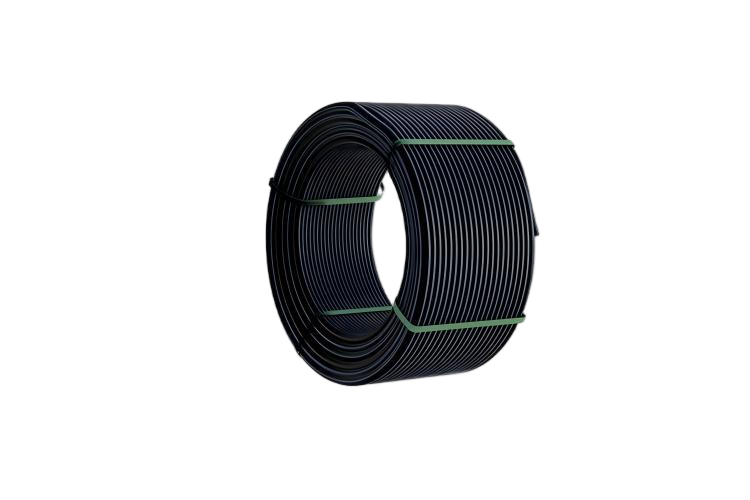
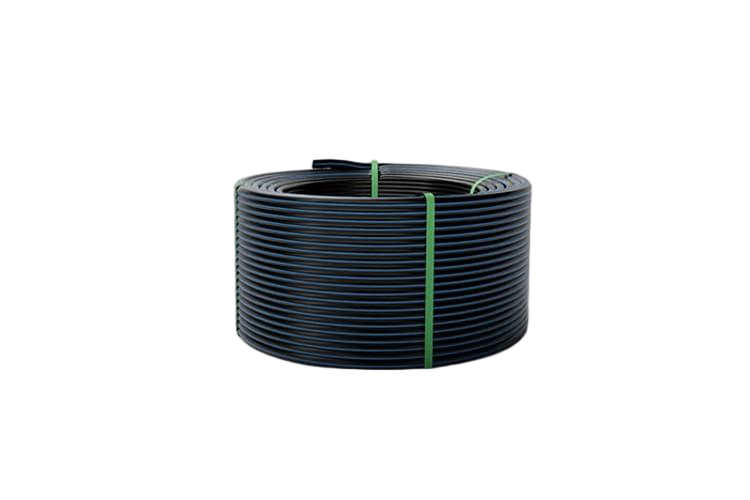
HDPE pipe is supplied either as straight lengths — typically 6 m and 12 m, bundled and strapped with end-caps, with 12 m lengths suiting a 40 ft container and 6 m a 20 ft — or, for small diameters (commonly up to about DN110, and up to roughly DN160 from some producers), in coils of 50 to a few hundred metres. The technique that controls freight cost is nesting, also called telescoping: smaller-diameter pipe is loaded inside the bore of larger pipe, filling the space that would otherwise ship as air. Because pipe cubes out before it weighs out, nesting can dramatically increase the metres of pipe per container and so cut the freight cost per metre. The table gives the standard container options. Most pipe ships in full-container loads (FCL); very large diameters that won't fit through standard container doors go on flat-racks, open-tops or as breakbulk. The two practical levers for a buyer are to ship 12 m lengths in 40 ft High-Cube containers (whose extra height suits volumetric cargo) and to confirm a nesting plan with the supplier so the container leaves full of pipe, not air.
| Container | Internal volume (approx) | Best for |
|---|---|---|
| 20 ft standard | ~33 CBM | 6 m straight lengths; smaller orders |
| 40 ft standard | ~67 CBM | 12 m straight lengths |
| 40 ft High-Cube (40HQ) | ~76 CBM (extra height) | Volumetric pipe — most metres per box |
| Flat-rack / open-top / breakbulk | — | Very large diameter that won't fit standard doors |
The documents every shipment needs
An international pipe shipment travels with a standard set of documents, and knowing what each one is for keeps a consignment moving through customs. The commercial invoice and packing list describe and value the goods. The bill of lading (B/L) is the carrier's contract and title document. The certificate of origin states where the pipe was made (and can unlock preferential duty rates). The mill or material test certificate (MTC) is the one technical buyers must scrutinise — it should confirm the resin grade (PE100/PE80), the SDR/PN, and the governing standard (ISO 4427, EN 12201, ASTM, or AS/NZS), so you can verify you got the pressure class you ordered. A third-party inspection certificate (SGS, Bureau Veritas or Intertek), often pre-shipment, gives independent confirmation. If the pipe is packed with any solid wood — pallets, crates or dunnage — that wood must carry the ISPM-15 mark (heat-treated and branded; the stamp itself is the proof, with no separate certificate), though pipe loose-loaded without wood doesn't trigger it. Finally, many markets require their own conformity certification before the goods can clear — SONCAP for Nigeria, SASO/SABER for Saudi Arabia, PVoC schemes elsewhere — and these must be arranged before shipment, not after.
How order-to-delivery flows
An international pipe order moves through a predictable sequence from enquiry to delivered goods, and the flowchart lays it out. The two steps buyers most often rush — pinning down the specification on the purchase order and confirming the destination's conformity requirements before production starts — are exactly the ones that cause delays and rejections when skipped.
5 costly mistakes pipe buyers make
- Using FOB or CIF for containerised pipe instead of FCA/CIP — leaving a risk gap at the terminal and (under CIF) only minimal insurance cover.
- Not nesting the pipe — telescoping smaller pipe inside larger fills the container; shipping it loose means paying ocean freight for air.
- Missing destination conformity (SONCAP / SASO-SABER / PVoC) — goods held or rejected at the port; arrange certification before shipment.
- No ISPM-15 mark on wooden packing, pallets or dunnage — quarantine, fumigation or re-export at the buyer's cost.
- Vague specs on the PO and MTC — not stating grade, SDR/PN and standard, so the wrong pressure class arrives and disputes follow.
Glossary
- Incoterms 2020
- The ICC's standard rules (EXW, FOB, CFR, CIF, FCA, CPT, CIP, DAP, DDP) defining who pays for and risks each part of a shipment.
- Volumetric cargo
- Light, bulky cargo (like pipe) that fills a container by volume before reaching its weight limit — it 'cubes out before it weighs out'.
- Nesting / telescoping
- Loading smaller-diameter pipe inside larger pipe to fill the otherwise-wasted bore — the biggest single freight-cost lever for pipe.
- MTC (mill/material test certificate)
- The document certifying the pipe's grade, SDR/PN and standard — the key technical check on what you actually received.
- ISPM-15
- The international rule for solid-wood packaging: wood must be heat-treated and branded with the IPPC mark (the stamp is the proof) — only triggered if wood is used.
- Destination conformity (SONCAP/SASO)
- Market-specific pre-shipment certification (e.g. Nigeria's SONCAP, Saudi Arabia's SASO/SABER) required to clear the goods on arrival.
References & sources
- [1]ICC — Incoterms 2020 rules (official)
- [2]ICC Academy — Incoterms 2020: FCA or FOB? (the container caveat)
- [3]ICC Academy — Incoterms 2020: CIP or CIF? (the insurance-level change)
- [4]IPPC — ISPM-15 — regulation of wood packaging in international trade
- [5]USDA APHIS — ISPM-15 wood packaging material — export guidance
- [6]US Dept of Commerce (trade.gov) — Common export documents
- [7]Trade Finance Global — Incoterms rules hub
- [8]Standards Organisation of Nigeria — SONCAP — conformity assessment programme
Frequently asked questions
Need expert advice on your project?
Our engineering team helps utilities, contractors and EPCs specify the right pipe material and SDR for their project. Get a no-obligation technical consultation.
Talk to an engineerRead next
13 min read
How to Buy HDPE Pipe: Specification Checklist & What to Demand From a Supplier (2026)
12 min read
HDPE Pipe Price & Cost Guide: What Actually Drives HDPE Pipe Pricing (2026)
12 min read
HDPE Pipe Size & Dimension Chart: OD, SDR, PN & Wall Thickness (2026)
12 min read
HDPE Pipe Handling, Storage & Transport: Best Practices (2026)
15 min read
How to Write an HDPE Pipe Specification: A Procurement & Engineering Checklist (2026)
Explore further
Related applications, material comparisons and country buying guides selected for this topic.